
1、 Basic cognitive stage
Equipment structure and principle
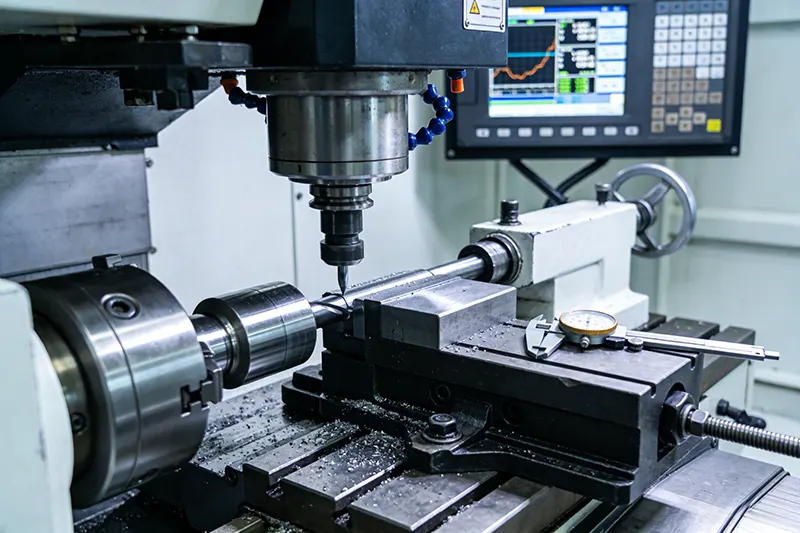
Understand the mechanical structure (spindle box, tool holder, bed, etc.) and control system (operation panel, display screen) of CNC lathes.
Understand the principle of CNC machining: Control tool movement through program instructions to achieve automated cutting.
Safety regulations and operations
Master the basic operation key functions such as emergency stop, reset, and spindle start stop.
Learn about workpiece clamping, tool installation, and cutting fluid usage standards.
2、 Core skill enhancement
Fundamentals of Programming
Learn G code (such as G00 quick positioning, G01 linear interpolation) and M code (such as M03 spindle forward rotation).
Master the graphical programming methods of UG and other software to achieve complex contour machining.
Knife alignment and processing technology
Step by step completion of X/Z axis tool alignment: end face positioning → outer circle cutting → coordinate input.
Process principle: rough first and then fine, close first and then far, and minimize the cutting path.
Typical Parts Processing
Shaft parts: outer circle/end face turning, thread machining.
Sleeve parts: inner hole machining, cone turning.
3、 Advanced practical direction
Complex processing technology
Multi line thread programming, arc interpolation, and groove cutting processing.
Tool radius compensation and tool tip arc compensation settings.
Efficiency optimization techniques
Use simulation functionality to validate programs and reduce trial cutting costs.
Optimize cutting parameters (speed/feed rate) to improve surface quality.
Industry application expansion
High precision machining cases in the fields of automotive parts and aerospace.
Automated production line integration under the trend of intelligent manufacturing.